



Getting ready for baby!
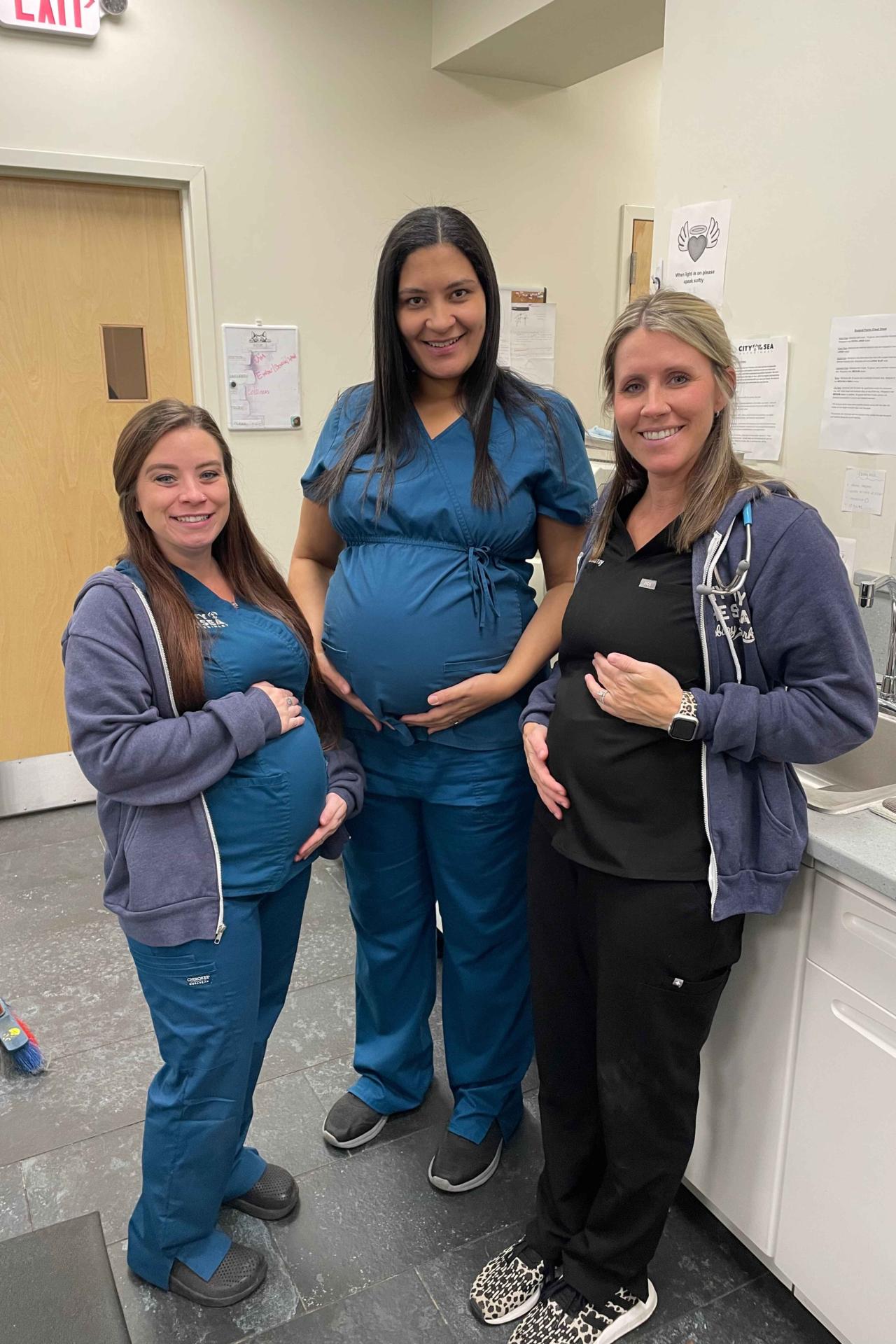 Bringing a new baby home is an exciting time, but it can be a big adjustment for our pets. Dogs and cats thrive on routine and familiarity so the arrival of a new family member can disrupt their daily lives. Preparing your pet before bringing your baby home can help ensure a smoother, less stressful transition for everyone.
Preparing while pregnant is the best time to start. Gradual changes are better than sudden changes in order for your pet to adjust.
Consider:
- Adjusting feeding, walking, or play schedules to more closely match what they will be after the baby arrives.
- Teaching your dog obedience skills, such as "sit," "stay," "leave it," and walking politely on a leash.
- Create designated pet-free areas if certain rooms (i.e nursery)
- Ensuring your pet is up to date on veterinary exams, vaccinations, parasite prevention, and any recommended health screenings.
Unfamiliar items can be scary for your pets. Several weeks before baby is expected, set up the baby gear.
Allow your pet to become accustomed to:
- Cribs and bassinets
- Strollers
- Swings and bouncers
- Baby toys
- Baby sounds and music
Reward your pet with treats and praise for their calm behavior around these items.
Where there are babies, there is a lot of new noises. To help get your pet accused to these new noise, play recordings of crying and other infant noises at a low volume. To make it a positive experience, reward them with treats, meals or playtime.
To reduce stress, maintaining regular feeding and exercise routines can be helpful.
For dogs:
- Continue daily walks and exercise.
- Provide enrichment activities.
- When possible, dedicate one-on-one time.
For cats:
- Maintain litter box cleanliness.
- Provide scratching posts and climbing opportunities.
- Offer regular play sessions.
In order to have safe interactions between both pets and children, it’s important to teach appropriate boundaries. Consider teaching your pet to settle on their dog bed and to avoid jumping on furniture unless invited. Even the most gentle pets should be supervised when interacting with children as they can become startled or overwhelmed.
Tips to introducing your baby when coming home:
- Let your pet greet returning family members calmly first.
- Stay relaxed and positive.
- Reward calm behavior.
- Do not force interactions.
It will take time for all pets to adjust, so be patient.
During these moments, it is important to look for signs of a stressed pet, including: hiding, appetite changes, vocalization, house-soiling accidents, destructive behavior or increased clinginess. If you notice any concerning signs, consider talking to your veterinarian as soon as possible to address these problems early on.
Important safety tips:
- NEVER leave a baby or child unattended with a pet.
- Keep pet food, medications and small toys out of reach for the baby/child.
- Give you pet a quiet retreat where they can be undisturbed.
- Give your pet adequate exercise.
- Teach children how to interact appropriately with animals.
Many pets can successfully adapt to life with a new baby if given the right tools. Starting preparation early and making gradual changes are key. Give yourself and your pet grace, it will take time to adjust to the new normal. If you have any questions or concerns about your pets behavior before or after baby comes home, reach out to your veterinarian. Anti-anxiety medications are available and can be very helpful for the transition in some pets.